My name is Euler. I hail from a small town called Machiques in Venezuela. I come from a humble, hardworking, and close-knit family. As the eldest of five siblings, I made sacrifices early on, I had to quit my studies to work and contribute to raising my brothers and sisters. My father was struck by a degenerative illness when I was young, rendering him unable to move or speak, and thus unable to work. In my country, I took on various jobs: driving buses, cleaning, performing electrical repairs, preparing and selling food, and even I had a small grocery store for 12 years.
I married 25 years ago and them I became a father. My family has always been my rock, motivating me to forge ahead in pursuit of my dreams. Ensuring the well-being of my wife, son, mother, and siblings has been my unwavering priority. Their happiness and tranquility bring me immense joy and peace.
In 2015, I arrived in the United States, seeking a brighter future. The economic, political, and social situation back home was far from ideal. Since my arrival, I’ve worked tirelessly—gardening, in Mexican restaurants, remodeling homes, at Amazon, as a trader, and even as a food delivery driver during the pandemic. But it was during those challenging times that I reinvented myself. From my own kitchen, I began preparing and selling Venezuelan cuisine to friends, neighbors, and colleagues. Through my dishes and the flavors of my homeland, I aimed to bring a glimmer of joy to people’s lives.
The kitchen has always been my sanctuary—a place where dreams take shape, creativity flows, and emotions find expression. And so, I continue to cook, not just to sustain myself, but to infuse a taste of happiness into the lives of others.
 Adding to basket
Funded
Euler
Machiques City Venezuelan Restaurant LLC

Repayment schedule
Monthly: One repayment made per month
End of term: One repayment made at the end of the loan term
Irregular: Any other repayment schedule
To see a detailed repayment schedule for a specific loan, click the "Repayment schedule" link on the loan profile under "Loan details."
What is the disbursed date?
In the case of partner loans, many of our Lending Partners choose to disburse loan funds before the loan request is posted on Kiva. We allow pre-disbursal because it ensures that the funds reach the borrower as soon as they are needed. Loan funds from Kiva lenders then go to backfill that amount and as a lender you assume the risk of the loan. By doing this, our Lending Partners assume the risk that, if the loan isn't funded by lenders, they will have to fund the loan without any funds from Kiva.
If a partner loan is not pre-disbursed, it will be listed on Kiva with an expected "post-disbursed" date. If a post-disbursed loan is not funded on Kiva, there is a chance that the borrower may not receive their loan. Some Lending Partners choose to disburse loans with other sources of funding, while other partners don't have the resources available to fund loans without Kiva lenders' support. No direct loans will be disbursed unless they fully fundraise on Kiva.
Funding model
What does "Partner covers currency loss" mean & how could it affect my Kiva loans?
Potential for currency exchange loss is noted on every loan profile under the loan details:
"Yes" means the Lending Partner will cover any currency loss. Lenders will not bear losses due to currency fluctuation
"Partial" means that the Lending Partner has opted to cover losses only up to 10%. If the U.S. dollar appreciates more than 10% against the local currency, those losses will be passed onto lenders.
"No" means that the Lending Partner is not covering any currency losses and all losses will be passed onto lenders.
"N/A" means the Lending Partner disburses loans to borrowers in USD so their loans are not subject to any currency fluctuation.
Do Kiva borrowers pay any interest on their loans?
Our partners collect interest from borrowers because there are many operational expenses associated with microfinance in developing markets, especially in rural areas. Many of Kiva's Lending Partners also provide additional services alongside their loan products such as business training, financial literacy lessons, or health services.
Kiva will not partner with an organization that charges unreasonable interest rates, and we require Lending Partners to fully disclose their rates. In addition, we only partner with microfinance institutions and organizations that have a social mission to serve the poor, unbanked, and underserved.
There are some 0% interest loans on Kiva, including all direct loans in the United States. To learn more about the interest rates Kiva borrowers pay, you can review the "Average cost to borrower" field on a loan profile.
We also encourage you to read the following articles if you are interested in further educating yourself on the topic: Microfinance 101 (https://www.kiva.org/microfinance), Top 10 things to know about microfinance (https://www.kiva.org/blog/top-10-things-to-know-about-microfinance), Microfinance interest rates explained (https://www.kiva.org/blog/whats-up-with-microfinance-interest-rates)
What is a risk rating?
The Lending Partner risk rating reflects the risk of institutional default associated with each of Kiva’s Lending Partners. A 0.5-star rating means the organization has a relatively higher risk of institutional default, while a 5-star rating indicates the organization is at a relatively lower risk of default, based on Kiva's analysis and the available information displayed in the Lending Partner section of every loan. Lending Partners with the lowest credit tier undergo a lighter level of due diligence and do not receive a risk rating; instead, in places where a risk rating would normally appear, these partners are labeled as “Experimental.” For more information, see "What is an Experimental Lending Partner?"
Direct loans also do not receive a formal risk rating. Instead, these loans are approved through “social underwriting”, where trustworthiness is determined by friends & family lending a portion of the loan request, or by a Kiva approved Trustee vouching for the borrower. Direct loans will appear as "Unrated" and lenders should always assume these loans represent the highest level of repayment risk on Kiva.
How are loans facilitated?
Kiva loans are facilitated through 2 models, partner and direct, that enable us to reach the greatest number of people around the world.
For partner loans, borrowers apply to a local Lending Partner, which manages the loan on the ground. Lending Partners are responsible for screening borrowers, disbursing loans, posting borrowers to the Kiva website for funding, collecting repayments and otherwise administering Kiva loans on the ground to borrowers.
For direct loans, borrowers apply through the Kiva website and may or may not be endorsed by a Trustee. Unlike Lending Partners, Trustees don't handle any financial transactions or have any duty to repay loans on behalf of their borrowers. Instead, Trustees take the role of providing support and business advice to their borrowers throughout the term of the loan.
More information about successive and concurrent loans
Most borrowers take out loans consecutively, meaning that they receive a second loan after having repaid the first. However, sometimes our Lending Partners give out concurrent loans, allowing borrowers to take out one primary loan and a secondary "add-on" loan along with it. These additional loans are typically smaller than the borrower's primary loan and serve a different purpose. We trust our partners to determine whether a borrower has the means to be able to repay a successive or concurrent loan.
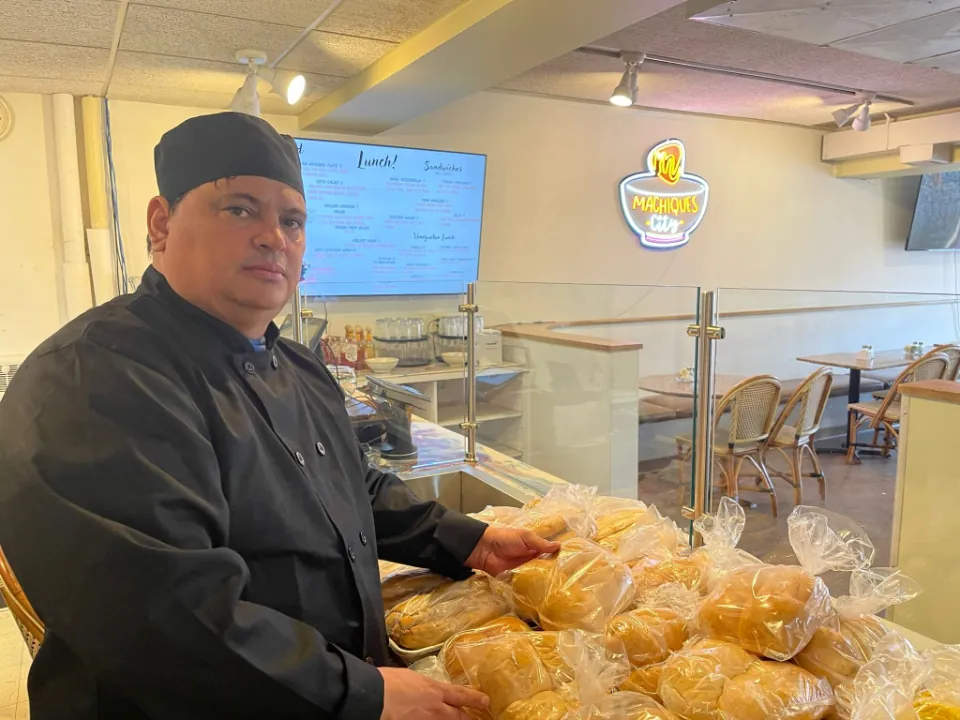
A loan helped a family-owned Venezuelan restaurant buy equipment to create other kinds of breads and offer new products.
Euler's story
This loan is special because:
More about this loan
Business Description
In June 2021, I created my business, Machiques City Venezuelan Restaurant LLC, and like a gift from destiny, in July of the same year, the doors of our restaurant opened in the downtown of Madison. The first days were a whirlwind of challenges and fears, but we pressed forward. My family stood by my side, unwavering, as we turned this dream into reality.
Our journey began with a bold mission: to serve an American breakfast menu. Gradually, we infused it with the vibrant flavors of Venezuela. The acceptance of new tastes, dishes, and culture wasn’t easy at first, but we persevered. Our hard work paid off, and today, our menu boasts a delightful fusion of American breakfast classics, sandwiches, salads, and an array of Venezuelan delights—from arepas and patacones to tequeños, empanadas, and pastries.
Our restaurant now is our home, open every day, offering a variety of breakfasts, lunches, dinners, and snacks. But we have bigger dreams. This loan would propel us toward our short-term goal: different kinds of salt breads, sweet breads, and other desserts. We hope to satisfy the Latin market, introduce fresh products to the American audience, and create job opportunities that benefit entire community.
Check us out on Instagram! @machiquescity.fastfoods@gmail.com
What is the purpose of this loan?
I would like to receive a loan that will enable me to purchase essential equipment such as a bakery industrial oven, an industrial bakery mixer, and a flour/bread cutter, among other materials and supplies. This investment is not just about equipment; it’s about the dream of expanding my restaurant’s offerings with a new production line of sweet and savory artisan breads, with a touch of Venezuelan style and flavor, these breads will not only diversify our menu but also reduce the preparation times of some dishes, thereby increasing our overall production efficiency.
But it doesn’t stop there. This initiative is also about giving back to the community by continuing to generate employment opportunities. Together, we can make this dream a reality!
Loan details
Loan length:
Repayment schedule
Monthly: One repayment made per month
End of term: One repayment made at the end of the loan term
Irregular: Any other repayment schedule
To see a detailed repayment schedule for a specific loan, click the "Repayment schedule" link on the loan profile under "Loan details."
What is the disbursed date?
In the case of partner loans, many of our Lending Partners choose to disburse loan funds before the loan request is posted on Kiva. We allow pre-disbursal because it ensures that the funds reach the borrower as soon as they are needed. Loan funds from Kiva lenders then go to backfill that amount and as a lender you assume the risk of the loan. By doing this, our Lending Partners assume the risk that, if the loan isn't funded by lenders, they will have to fund the loan without any funds from Kiva.
If a partner loan is not pre-disbursed, it will be listed on Kiva with an expected "post-disbursed" date. If a post-disbursed loan is not funded on Kiva, there is a chance that the borrower may not receive their loan. Some Lending Partners choose to disburse loans with other sources of funding, while other partners don't have the resources available to fund loans without Kiva lenders' support. No direct loans will be disbursed unless they fully fundraise on Kiva.
Funding model
What does "Partner covers currency loss" mean & how could it affect my Kiva loans?
Potential for currency exchange loss is noted on every loan profile under the loan details:
"Yes" means the Lending Partner will cover any currency loss. Lenders will not bear losses due to currency fluctuation
"Partial" means that the Lending Partner has opted to cover losses only up to 10%. If the U.S. dollar appreciates more than 10% against the local currency, those losses will be passed onto lenders.
"No" means that the Lending Partner is not covering any currency losses and all losses will be passed onto lenders.
"N/A" means the Lending Partner disburses loans to borrowers in USD so their loans are not subject to any currency fluctuation.
Do Kiva borrowers pay any interest on their loans?
Our partners collect interest from borrowers because there are many operational expenses associated with microfinance in developing markets, especially in rural areas. Many of Kiva's Lending Partners also provide additional services alongside their loan products such as business training, financial literacy lessons, or health services.
Kiva will not partner with an organization that charges unreasonable interest rates, and we require Lending Partners to fully disclose their rates. In addition, we only partner with microfinance institutions and organizations that have a social mission to serve the poor, unbanked, and underserved.
There are some 0% interest loans on Kiva, including all direct loans in the United States. To learn more about the interest rates Kiva borrowers pay, you can review the "Average cost to borrower" field on a loan profile.
We also encourage you to read the following articles if you are interested in further educating yourself on the topic: Microfinance 101 (https://www.kiva.org/microfinance), Top 10 things to know about microfinance (https://www.kiva.org/blog/top-10-things-to-know-about-microfinance), Microfinance interest rates explained (https://www.kiva.org/blog/whats-up-with-microfinance-interest-rates)
What is a risk rating?
The Lending Partner risk rating reflects the risk of institutional default associated with each of Kiva’s Lending Partners. A 0.5-star rating means the organization has a relatively higher risk of institutional default, while a 5-star rating indicates the organization is at a relatively lower risk of default, based on Kiva's analysis and the available information displayed in the Lending Partner section of every loan. Lending Partners with the lowest credit tier undergo a lighter level of due diligence and do not receive a risk rating; instead, in places where a risk rating would normally appear, these partners are labeled as “Experimental.” For more information, see "What is an Experimental Lending Partner?"
Direct loans also do not receive a formal risk rating. Instead, these loans are approved through “social underwriting”, where trustworthiness is determined by friends & family lending a portion of the loan request, or by a Kiva approved Trustee vouching for the borrower. Direct loans will appear as "Unrated" and lenders should always assume these loans represent the highest level of repayment risk on Kiva.
How are loans facilitated?
Kiva loans are facilitated through 2 models, partner and direct, that enable us to reach the greatest number of people around the world.
For partner loans, borrowers apply to a local Lending Partner, which manages the loan on the ground. Lending Partners are responsible for screening borrowers, disbursing loans, posting borrowers to the Kiva website for funding, collecting repayments and otherwise administering Kiva loans on the ground to borrowers.
For direct loans, borrowers apply through the Kiva website and may or may not be endorsed by a Trustee. Unlike Lending Partners, Trustees don't handle any financial transactions or have any duty to repay loans on behalf of their borrowers. Instead, Trustees take the role of providing support and business advice to their borrowers throughout the term of the loan.
More information about successive and concurrent loans
Most borrowers take out loans consecutively, meaning that they receive a second loan after having repaid the first. However, sometimes our Lending Partners give out concurrent loans, allowing borrowers to take out one primary loan and a secondary "add-on" loan along with it. These additional loans are typically smaller than the borrower's primary loan and serve a different purpose. We trust our partners to determine whether a borrower has the means to be able to repay a successive or concurrent loan.
About Machiques City Venezuelan Restaurant LLC
Industry: Food
Years in operation: 3 years - 5 years
Website: machiquescityrestaurant.com
Lenders and lending teams
Country: United States
Trustee: Latino Chamber of Commerce of Dane County

What are Trustee tiers?
For for more information about Trustee tiers, visit: kivaushub.org/trustee-tiers
Why are you endorsing Euler?
At WLCC, we take immense pride in endorsing the Machiques City Venezuelan Restaurant, LLC and its dedicated owner. He has put their heart and soul into realizing their dream of owning and expanding a business. Their journey stands as a testament to their commitment and hard work. - Monica
Tags
Loan tags help lenders find loans that match certain areas of interest.
Loan details
Loan length:
Repayment schedule
Monthly: One repayment made per month
End of term: One repayment made at the end of the loan term
Irregular: Any other repayment schedule
To see a detailed repayment schedule for a specific loan, click the "Repayment schedule" link on the loan profile under "Loan details."
What is the disbursed date?
In the case of partner loans, many of our Lending Partners choose to disburse loan funds before the loan request is posted on Kiva. We allow pre-disbursal because it ensures that the funds reach the borrower as soon as they are needed. Loan funds from Kiva lenders then go to backfill that amount and as a lender you assume the risk of the loan. By doing this, our Lending Partners assume the risk that, if the loan isn't funded by lenders, they will have to fund the loan without any funds from Kiva.
If a partner loan is not pre-disbursed, it will be listed on Kiva with an expected "post-disbursed" date. If a post-disbursed loan is not funded on Kiva, there is a chance that the borrower may not receive their loan. Some Lending Partners choose to disburse loans with other sources of funding, while other partners don't have the resources available to fund loans without Kiva lenders' support. No direct loans will be disbursed unless they fully fundraise on Kiva.
Funding model
What does "Partner covers currency loss" mean & how could it affect my Kiva loans?
Potential for currency exchange loss is noted on every loan profile under the loan details:
"Yes" means the Lending Partner will cover any currency loss. Lenders will not bear losses due to currency fluctuation
"Partial" means that the Lending Partner has opted to cover losses only up to 10%. If the U.S. dollar appreciates more than 10% against the local currency, those losses will be passed onto lenders.
"No" means that the Lending Partner is not covering any currency losses and all losses will be passed onto lenders.
"N/A" means the Lending Partner disburses loans to borrowers in USD so their loans are not subject to any currency fluctuation.
Do Kiva borrowers pay any interest on their loans?
Our partners collect interest from borrowers because there are many operational expenses associated with microfinance in developing markets, especially in rural areas. Many of Kiva's Lending Partners also provide additional services alongside their loan products such as business training, financial literacy lessons, or health services.
Kiva will not partner with an organization that charges unreasonable interest rates, and we require Lending Partners to fully disclose their rates. In addition, we only partner with microfinance institutions and organizations that have a social mission to serve the poor, unbanked, and underserved.
There are some 0% interest loans on Kiva, including all direct loans in the United States. To learn more about the interest rates Kiva borrowers pay, you can review the "Average cost to borrower" field on a loan profile.
We also encourage you to read the following articles if you are interested in further educating yourself on the topic: Microfinance 101 (https://www.kiva.org/microfinance), Top 10 things to know about microfinance (https://www.kiva.org/blog/top-10-things-to-know-about-microfinance), Microfinance interest rates explained (https://www.kiva.org/blog/whats-up-with-microfinance-interest-rates)
What is a risk rating?
The Lending Partner risk rating reflects the risk of institutional default associated with each of Kiva’s Lending Partners. A 0.5-star rating means the organization has a relatively higher risk of institutional default, while a 5-star rating indicates the organization is at a relatively lower risk of default, based on Kiva's analysis and the available information displayed in the Lending Partner section of every loan. Lending Partners with the lowest credit tier undergo a lighter level of due diligence and do not receive a risk rating; instead, in places where a risk rating would normally appear, these partners are labeled as “Experimental.” For more information, see "What is an Experimental Lending Partner?"
Direct loans also do not receive a formal risk rating. Instead, these loans are approved through “social underwriting”, where trustworthiness is determined by friends & family lending a portion of the loan request, or by a Kiva approved Trustee vouching for the borrower. Direct loans will appear as "Unrated" and lenders should always assume these loans represent the highest level of repayment risk on Kiva.
How are loans facilitated?
Kiva loans are facilitated through 2 models, partner and direct, that enable us to reach the greatest number of people around the world.
For partner loans, borrowers apply to a local Lending Partner, which manages the loan on the ground. Lending Partners are responsible for screening borrowers, disbursing loans, posting borrowers to the Kiva website for funding, collecting repayments and otherwise administering Kiva loans on the ground to borrowers.
For direct loans, borrowers apply through the Kiva website and may or may not be endorsed by a Trustee. Unlike Lending Partners, Trustees don't handle any financial transactions or have any duty to repay loans on behalf of their borrowers. Instead, Trustees take the role of providing support and business advice to their borrowers throughout the term of the loan.
More information about successive and concurrent loans
Most borrowers take out loans consecutively, meaning that they receive a second loan after having repaid the first. However, sometimes our Lending Partners give out concurrent loans, allowing borrowers to take out one primary loan and a secondary "add-on" loan along with it. These additional loans are typically smaller than the borrower's primary loan and serve a different purpose. We trust our partners to determine whether a borrower has the means to be able to repay a successive or concurrent loan.
Trustee: Latino Chamber of Commerce of Dane County
What are Trustee tiers?
For for more information about Trustee tiers, visit: kivaushub.org/trustee-tiers
Why are you endorsing Euler?
At WLCC, we take immense pride in endorsing the Machiques City Venezuelan Restaurant, LLC and its dedicated owner. He has put their heart and soul into realizing their dream of owning and expanding a business. Their journey stands as a testament to their commitment and hard work. - Monica
You are opting out of using Free Trial.
You have selected to not use your Free Trial and will be prompted to pay for this loan using your own money.
Agree Use a Free TrialShoot! This loan is ineligible.
Your free credit can't be applied to this loan. If you would like to make a loan to this borrower anyway, you will have to use your own money.
Lend Anyway Find an Eligible LoanYou cannot use your Free Trial to support this loan.
Free Trials cannot be used to make loans during their private fundraising period on Kiva. If you would like to lend to this borrower anyway, you will have to use your own money.
Agree Find an Eligible Loan