
Planting Empowerment
What to know about this Lending Partner
Kiva conducts regular, ongoing monitoring of all Lending Partners, but only posts status updates here in response to relevant, major changes at the partner.
Status update — November 15, 2016
Planting Empowerment engaged with Kiva to offer additional benefits to its partner communities and scale a new agro-forestry model it piloted. The initial 2 plantain projects financed using Kiva lending started well and achieved a desired result by also creating co-benefits for the timber trees planted on the same parcels of land. Following this initial pilot, Planting Empowerment expanded to new communities with a next round of loans from Kiva. This expansion unfortunately suffered setbacks due to weather, planting delays, lack of viability of seedling production and staffing constraints in trying to manage plantings across different sites. While there was initial hope that many of their projects would be able to recover from these setbacks and become profitable, after a longer-than-normal dry season, the projects did not meet production goals despite the injection of additional capital from Planting Empowerment, so the organization has decided to stop the projects.
Planting Empowerment wants to thank the lenders for their generous support of their plantain projects. Much was learned by all and a substantial economic impact was generated by the projects even though they never because profitable. Planting Empowerment's final loans with Kiva have been defaulted and the partnership has now closed.
Partner description:
Founded in 2006 by former Peace Corps volunteers, Planting Empowerment works with indigenous communities and smallholder farmers in Panama to sustainably grow high-value trees and food crops. To empower these populations, the organization works through a more inclusive land lease model, provides employment opportunities and technical agroforestry training to some community members, and shares harvest profits with its partner communities.
As a for-profit social enterprise, Planting Empowerment has three goals: 1) maximize financial returns from tropical timber and farming operations, 2) empower local communities to manage their natural resources more effectively, and 3) combat deforestation in Panama with sustainable forestry practices.
Traditionally, communities in this region have relied on cattle ranching and slash-and-burn agriculture for survival. After witnessing the environmental and economic consequences of this approach, the founders of Planting Empowerment began working with communities to create another approach — one that meets economic needs in an environmentally sustainable way. This directive shaped the organization’s training and financing programs.
Planting Empowerment does not require communities to invest financially in the switch to agroforestry. Instead, the communities lease parts of their land and provide their labor to plant and maintain the trees and crops. This enables the organization to reach poor communities that lack the upfront capital and technical expertise to undertake large-scale agroforestry projects. This also makes finding financing the organization’s biggest challenge.
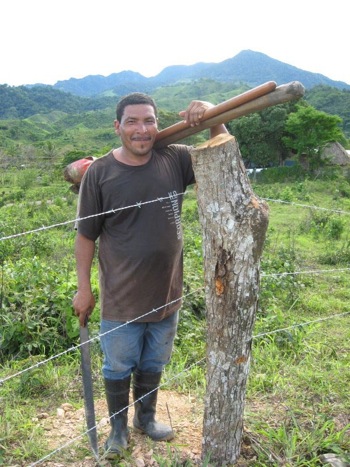
A unique approach to lending:
Planting Empowerment is partnering with Kiva to offer in-kind loans to indigenous communities for tropical timber and plantain projects. Kiva funding will enable the company to scale its operations and work with more local partners to establish sustainable farming practices.
Profits generated by harvests of tree and plantain crops are shared by both growers and Planting Empowerment to ensure that both parties have a stake in projects’ success. Community members are involved in every phase, from land selection to contract negotiation to project management. The goal is to equip them with the resources and skills they need to continue farming sustainably on their own.
Planting Empowerment offers 2 types of loans to farmers through Kiva:
1) Timber loans: These loans cover all the costs needed to help communities establish their own tropical timber projects, including seedlings of several different tree species, plantation administration, labor and other inputs. Communities will intercrop plantains with the trees to generate short-term income as the trees grow to harvestable size. This type of loan is repaid by proceeds from plantain and timber harvests.
2) Plantain intercropping loans: These loans pay for the planting of plantains, enabling communities to grow them while also growing timber to generate short-term income as hardwood trees mature. Kiva loans cover the initial costs and are repaid with harvest revenue.
Planting Empowerment estimates that farming trees and plantains could generate $245 per hectare per year, compared to $150 per year growing corn on that same plot, or $200 a year raising cattle. This could make a huge difference for rural indigenous communities in Panama that communally own large tracts of unused, deforested land, but exhibit poverty rates nearly three times the national average.
Image courtesy of Planting Empowerment.